Queer Places:
Harvard University (Ivy League), 2 Kirkland St, Cambridge, MA 02138
Oakland Cemetery, 927 Jackson St, St Paul, MN 55117, United States
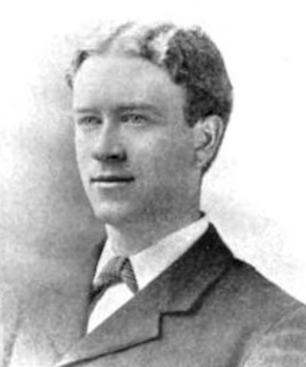 Charles Macomb Flandrau (December 9, 1871 – March 28, 1938) was a prominent American author, essayist, and critic whose life and work occupy a
fascinating space in late 19th- and early 20th-century literature, particularly within the context of early queer cultural history.
Charles Macomb Flandrau (December 9, 1871 – March 28, 1938) was a prominent American author, essayist, and critic whose life and work occupy a
fascinating space in late 19th- and early 20th-century literature, particularly within the context of early queer cultural history.
Born in St. Paul, Minnesota, to Judge Charles Eugene Flandrau and Rebecca Blair McClure Flandrau, he grew up in a distinguished Midwestern family
before heading East to attend Harvard University. Graduating in 1895, Flandrau immersed himself in elite academic and literary circles as an editor for
the Harvard Monthly and the Advocate, alongside memberships in the Lampoon, the Hasty Pudding Club, and the Delphic Club.
Following his graduation, Flandrau briefly taught English literature at Harvard, tutored overseas, and worked as an editor for The Youth's Companion
in New York City. His literary career erupted with the publication of his debut book, Harvard Episodes (1897), a collection of short stories examining
contemporary undergraduate life. Praised as a remarkably realistic portrayal of university culture, it became an instant bestseller that shocked
traditional academic circles with its pervasive, Wildean aestheticism and exploration of alternative romantic sensibilities. Flandrau followed this
success with a second college-themed book, The Diary of a Freshman (1901), and established himself as a popular contributor to the Saturday Evening Post
under the commission of George Horace Lorimer.
Beyond campus life, Flandrau achieved lasting acclaim for Viva Mexico! (1908), a travel memoir based on an extended visit to his brother William’s
Mexican coffee plantation. Celebrated for its sharp, witty observations of social customs and political dynamics under President Porfirio Díaz, it
remains hailed as one of the finest accounts of Mexico from that era. His later publications included essay collections like Prejudices (1911),
Loquacities (1931), and Sophomores Abroad (1935). Later in life, Flandrau served as a drama and music critic for the St. Paul Pioneer Press, anchored the
local Nimbus Club as a mentor to younger writers, and—financially independent—divided his time between St. Paul, Majorca, Paris, and Normandy before his
death in 1938.
Flandrau’s life and artistic output are deeply intertwined with the early formation of queer American literary culture, specifically the "Wildean"
archetype of the aesthete that flourished at Harvard during the 1890s. In literary history and queer archives, such as in studies of same-sex desire and
homosocial networks by scholars like Roger Austen, Flandrau is frequently contextualized alongside contemporaries who challenged Victorian norms.
As a leading light of Oscar Wilde's intellectual footprint at Harvard—distinguished from the rougher
"Whitmanic" warrior archetype of the era—Flandrau frequented elite, bohemian circles. He was a regular guest at the legendary Sunday afternoon salons
hosted by Harvard zoologist William McMichael Woodworth at 149 Brattle Street. Alongside fellow
author Pierre La Rose, Flandrau rubbed elbows there with an eclectic mix of artists,
intellectuals, and international travelers, reflecting a covert yet vibrant network of same-sex affinity. Figures like
Isabella Stewart Gardner similarly gathered these interconnected circles, bridging artists like
John Singer Sargent, Henry James, and
Clayton Johns. Flandrau's Harvard Episodes captured this delicate, subversive atmosphere so accurately that
George Santayana—himself a central figure of the campus's aesthetic underground—regularly recommended it to
anyone seeking to understand the nuanced, homoerotic, and artistic pulse of 1890s Harvard.
References:
Other references:
- Harvard Episodes (1897) – Boston: Copeland and Day
- The Diary of a Freshman (1901) – New York: Doubleday, Page & Co. (Serialized earlier and featured heavily in The Saturday Evening Post)
- Viva Mexico! (1908) – New York and London: D. Appleton and Company
- Prejudices (1911) – New York: D. Appleton and Company
- Loquacities (1931) – New York: D. Appleton and Company
- Sophomores Abroad (1935) – New York: D. Appleton and Company
- Haeg, Larry. In Gatsby's Shadow: The Story of Charles Macomb Flandrau (2004) – Iowa City: University of Iowa Press. (A comprehensive biography utilizing Flandrau's unpublished letters, personal papers, and local newspaper columns).
- Austen, Roger. Gauging Normalality: The Life and Writing of Charles Macomb Flandrau (or related archival frameworks on turn-of-the-century Harvard queer culture and aestheticism).
- Minnesota Historical Society (MNopedia) – Archival resources and historical overviews concerning Flandrau's role in the St. Paul literary community and the Nimbus Club.
Support this project
This website is a passion project researched, developed, and funded entirely by me. If you find the content valuable and would like to help support the ongoing research and hosting costs, any contribution is deeply appreciated.
Thank you for keeping this independent resource alive!
My books on Amazon: Elisa Rolle's books
BACK TO HOME PAGE